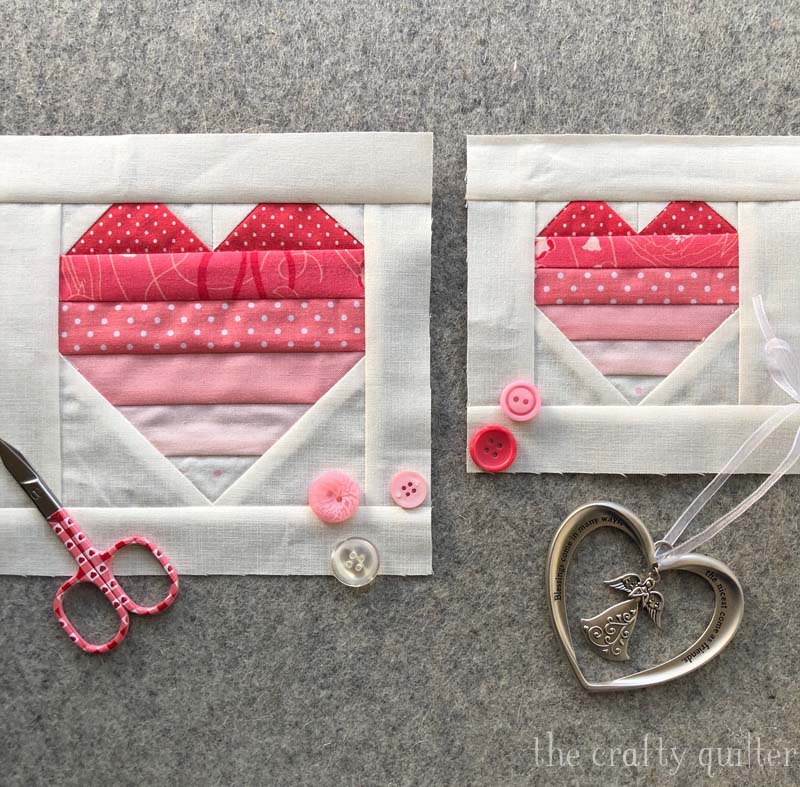
Today, I will be focusing on the applique technique I used for this project. It’s a turned edge applique as opposed to a raw edge applique. With turned edge applique, you don’t need to finish the edges of your applique shapes with a blanket stitch or satin stitch. But, you do need to stitch it down to the background and this can be done by hand or machine. I chose machine stitching using a stitch that is very similar to a blind hem. I’ll get to that in a bit.
You can find Part 1 of this project here.
Here are the tools you’ll need for the applique:
- Fabric scraps
- Fusible lightweight interfacing
- Straw (the wider the better)
- Ball point bodkin (yep, that’s not a typo)
- Seam ripper
- Wooden pressing tool
- Monofilament or “invisible” thread
- Perfect Circles, by Karen Kay Buckley (optional)
- Applique placement diagram – see pdf link in Step 1.

A ball point bodkin is the tool shown at the top of the picture above. This one is made by Dritz and you can find it at most fabric and craft stores or online here. You could also use a small crochet hook or even a plastic swizzle stick (martini anyone?)
Steps for making turned edge applique shapes with fusible interfacing:
1. Print out the Flower Placement Diagram and trace applique shapes onto smooth side of fusible interfacing using a pencil:

2. Layer right side of fabric to fusible (rough) side of interfacing. Stitch on drawn line using a short stitch length – 1.5 to 1.8. Make sure your curves are smooth as this is what determines how smooth your finished shape will be. Pivot frequently!

3. Trim 1/8″ away from stitching. Clip just to the stitching on inside points:

4. Using a seam ripper, carefully make a 1/2″ slash in the center of the interfacing:

5. Next, you need to turn the shape right side out. Here is an easy way to do that without having to create an enormous hole in the interfacing. Insert the straw through the opening until you reach the stitching. Next, use the ball point bodkin or similar tool to push the applique shape into the straw (a picture speaks a thousand words):

6. Remove the straw. Now you have an edge of the applique turning through the hole:

7. Repeat the same process, but going up to the other edge of the applique:

8. At this point you should be able to turn the entire shape right side out. Use the ball point bodkin to smooth the edges from the inside (through the same hole).

9. Because there is fusible interfacing on the back of the applique shape, you will need to use a wooden pressing tool or your fingers to smooth out the edges from the top/outside:

10. Repeat the above steps for the remaining flowers and leaves. Now you’re ready to press your shapes onto the background fabric. Using the applique placement diagram as a guide, arrange shapes on the basket block and press with a hot iron. Press again from the back side.

11. The circles for the flower centers can be made with a variety of techniques. For this project, I used a template circle from Perfect Circles and traced it onto the wrong side of the fabric. You can also use a file folder or similar heavy paper for a template.


12. Trim 1/4″ away from drawn line. Using a needle and thread, make running stitches in the seam allowance. Leave a thread tail at the end:

13. Insert the plastic circle template into the middle of your circle and pull the thread tails to form a circle. Press. (The template is made out of heat-resistant plastic).
Sorry for the blurry picture. Here’s another one:

14. Loosen the thread tails just enough to remove the plastic circle and then re-tighten and press again from the front:

15. You can trim the thread tails at this point. To adhere the circle onto the flower, use a basting glue such as Roxanne’s Glue Baste It. Just place a little glue near the seam allowance. You can barely see the white dots of glue in the picture below:

If making circles seems like too much trouble, you could always use buttons – just as cute!

16. Now you get to stitch this all down! When I use this technique, I’m aiming for an invisible looking stitch. I’ve even had people think that it was done by hand (that’s a great compliment!)
I think the key to achieving this look is using “invisible” or monofilament thread in the top of your machine. (I use a cotton bobbin thread that matches my background fabric). I have used many brands of invisible thread: YLI, Superior Mono-poly, and Sew Art International. These are all good choices, but only Superior is made out of polyester – the others are made out of nylon. This doesn’t matter too much, except when and if you iron your applique, you need to make sure you’re NOT using a hot iron or you could melt the monofilament thread. Use a medium heat setting instead.

The other key to this technique is using the correct stitch on your machine. I usually use the vari-overlock stitch on my Bernina. Not all machines have this stitch, but it’s very similar to a blind-hem stitch only it’s reversed and it has fewer straight stitches in between the “v”. I mirror image the stitch and then it works for me.

You want the straight stitches to fall in the background fabric right next to the applique and the bite or “v” to go just inside your applique shape. The bites should be spaced about 1/4″ apart.

In the above picture, the needle is taking a straight stitch just next to the flower and then it will take one zig zag stitch to the left, into the flower. This is what it looks like from the back:

My stitches are pretty small and the setting on my sewing machine is at 1.6 stitch length and 1.1 stitch width.

If your sewing machine does not have a blind hem or vari-overlock stitch, you can use a zig zag stitch with great results. You’ll want the width to be as narrow as possible and the length should be longer than “normal”. I don’t remember what my settings were on my machine, but I finished one of my basket block appliques with this stitch and it came out great.
Here’s what the back of it looks like:

The front should look pretty good too!

Because of the invisible thread used on top, you really can’t see the stitches from the front. Some people like invisible thread for this reason – it’s very forgiving. But, it’s also hard to see as you’re working with it, so be patient.
This type of applique is great for projects with larger and simpler shapes. I hope you give it a try!
I’ll be back with Part 3 – putting it all together with sashing and borders.

Let me know if you have any questions!
Julie