
How To Mark Diagonal Lines Quickly With The Spee-Di Tool
I love a good quilting tool, especially one that makes a common task quicker and easier. If you’ve made half-square triangles, flying geese, or stitch-and-flip units, you know how much time can be spent marking diagonal lines on fabric. It’s one of those necessary steps that can become quite tedious. I was recently introduced to the Spee-Di Tool from Purple Hobbies, and it makes marking diagonal sewing lines fast, easy, and surprisingly satisfying. If you’re looking for a quicker way to prep your quilt pieces, this clever little tool might become a favorite in your sewing room.
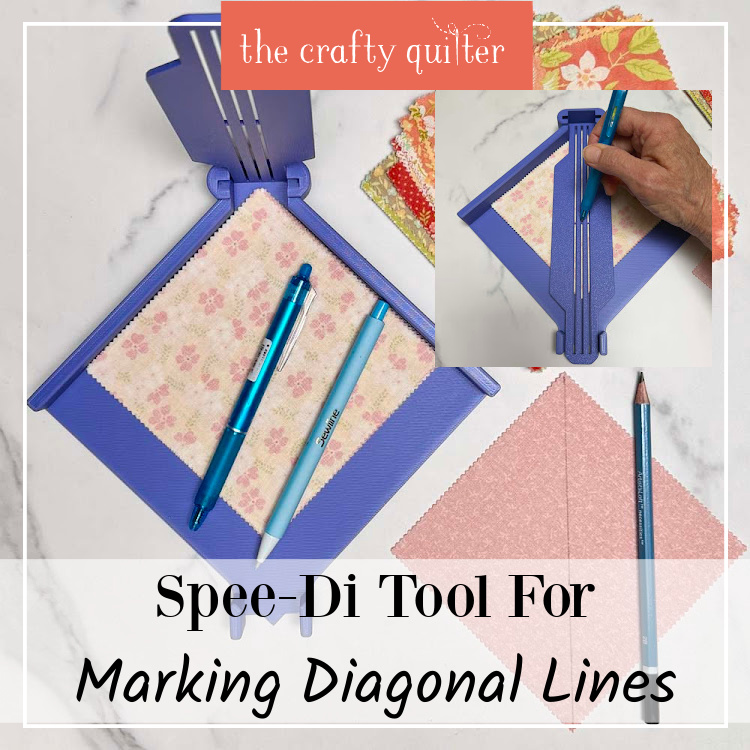
What Is The Spee-Di Tool?
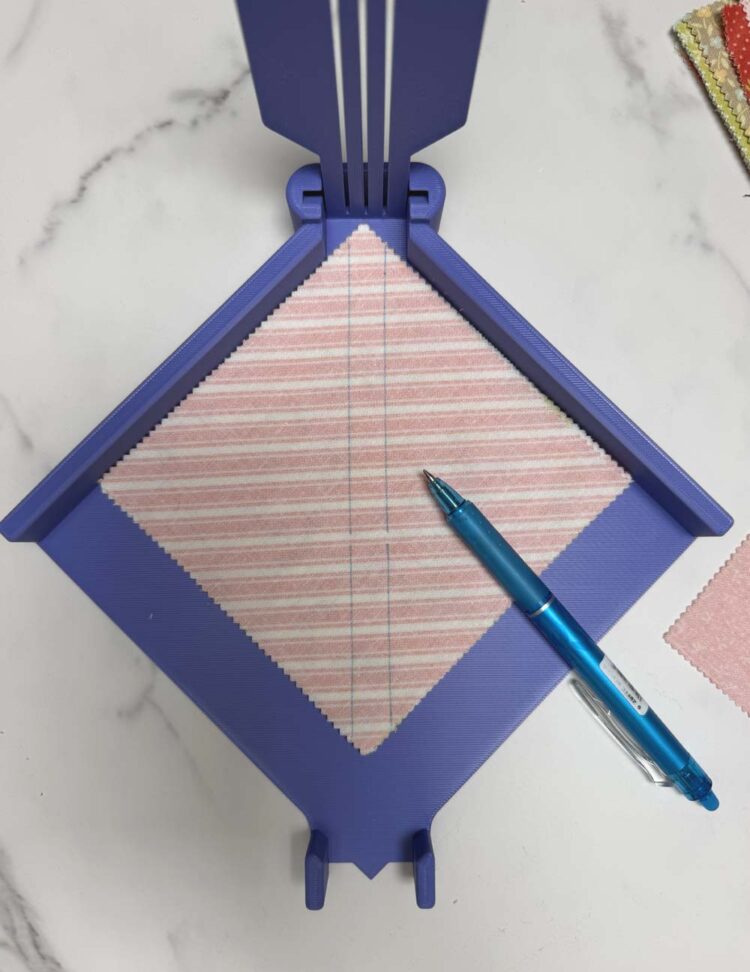
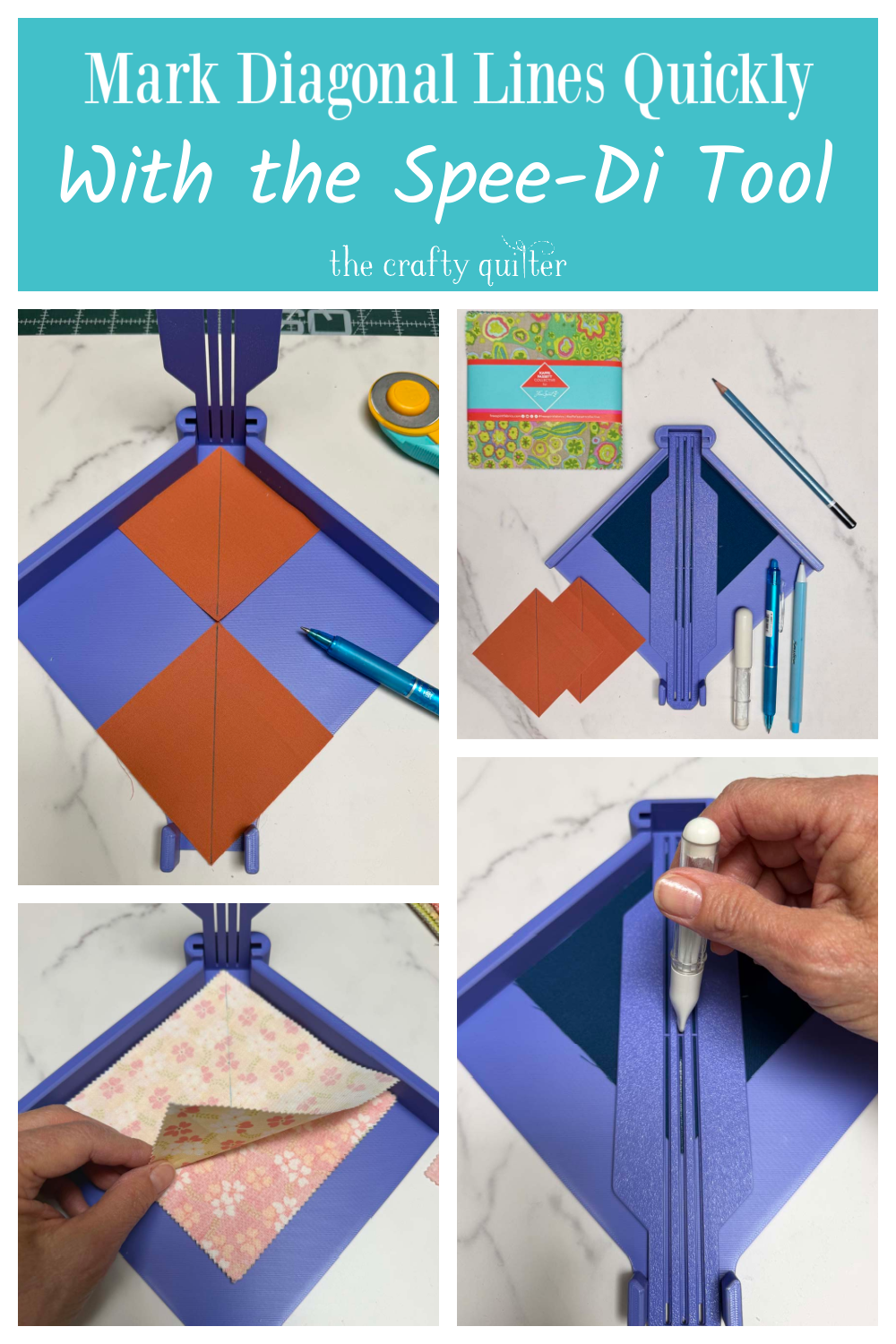
The Spee-Di Tool consists of a plastic frame that holds your fabric squares securely in place while you mark them. A hinged guide with built-in slots folds over the fabric, allowing you to draw either a single diagonal line through the center or two lines positioned 1/4″ on either side of the diagonal. One of my favorite features is that you can stack more than 40 fabric squares at once, making quick work of repetitive marking. For smaller squares, you can place two stacks in opposite corners of the frame to speed up the process even more.
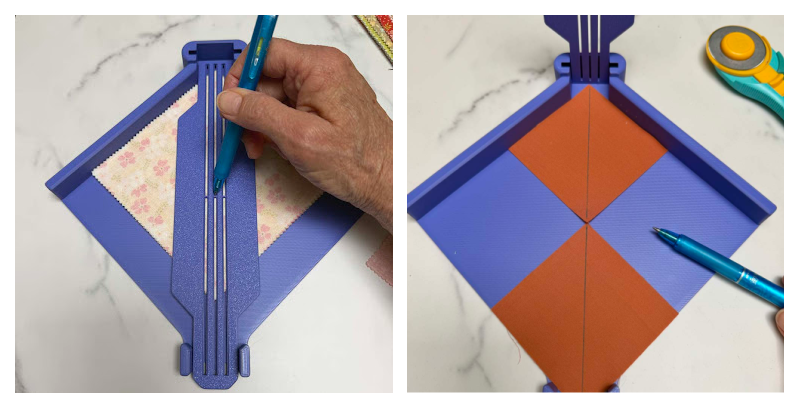
It’s available in ten colors and three sizes are offered:
- 3″ for squares up to 3″ (fits 2 1/2″ precuts perfectly)
- 6″ for squares up to 6″ (a full stack of 5″ precuts fits inside)
- 10″ for squares up to 10″ (a full stack of 10″ precuts fits inside)
I have the 6″ tool which will accommodate most of my quilting needs. Lately, I’ve been using it to mark diagonal lines on the small squares for 4-at-a-time flying geese. HSTs are next on the agenda.
How To Use The Spee-Di Tool
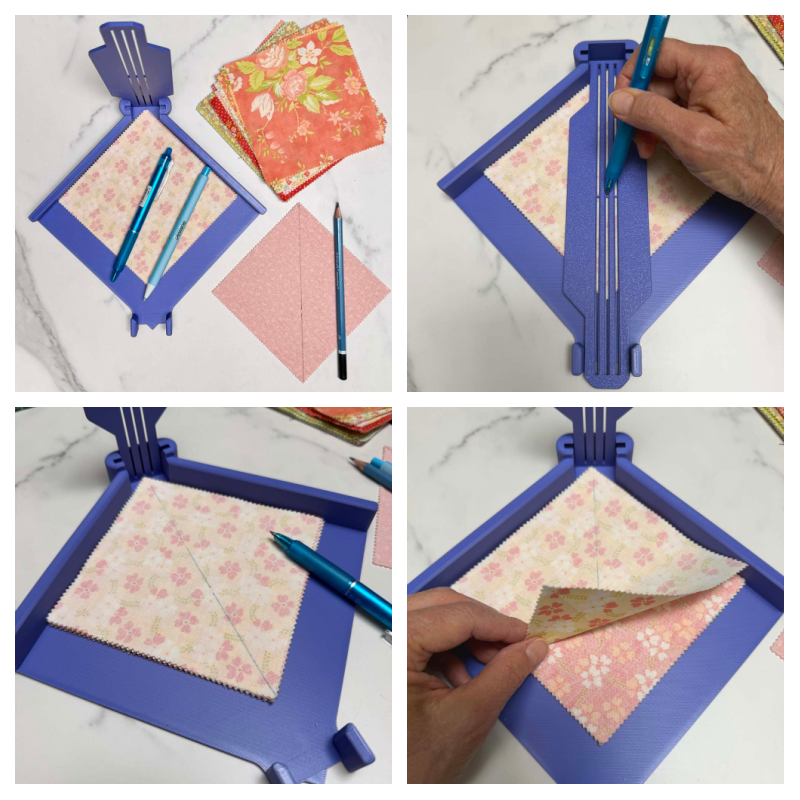
The Spee-Di Tool is very intuitive and easy to use. Just follow these simple steps.
- Lift the hinged guide – I call it a handle.
- Position fabric wrong side up inside the frame, aligning the corner of the fabric squares with the corner of the frame.
- Position the handle over the fabric, making sure the bottom corner of the fabric square lines up with the center diagonal slot.
- Mark your preferred diagonal line(s).
- Lift the handle and remove the marked square. Continue on to the next one underneath.
What Marking Pens Work Best With The Spee-Di Tool?
Most thin marking tools will work well. Common ones available are:
- FriXion Pens
- Mechanical pencils
- Sewline Tailor’s Click Fabric Pencils
- Clover Chaco Liner Pens
- Standard pencils
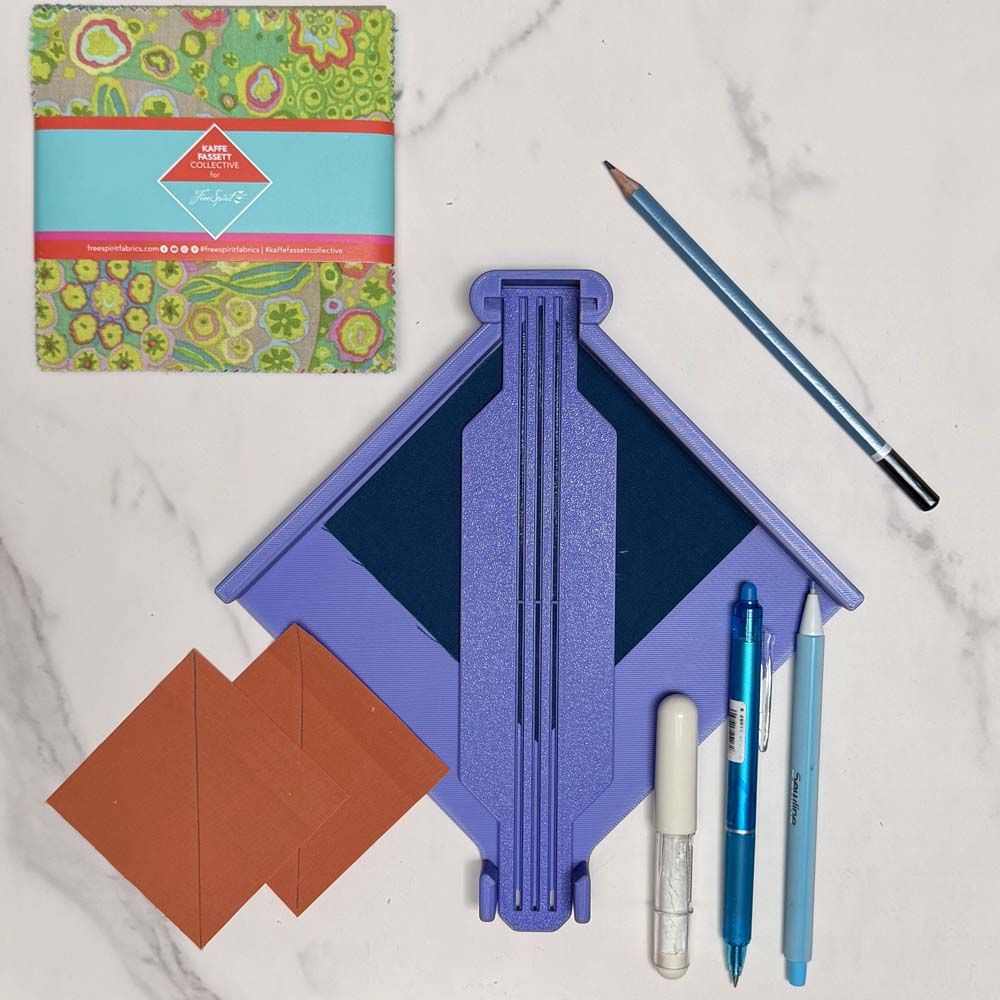
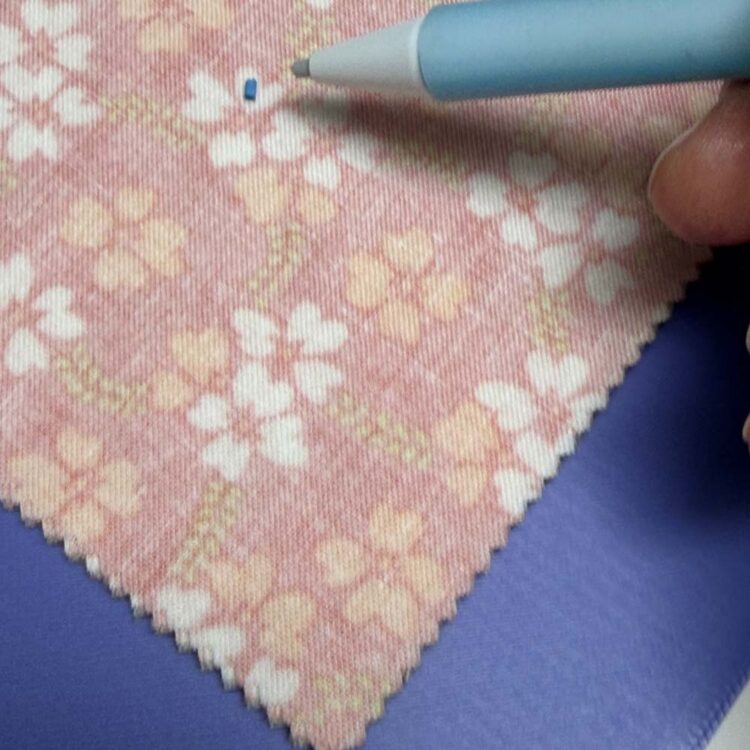
The guide-slots are narrow to ensure precision, so it’s always wise to test out your marker first. You may need to be extra careful with mechanical and Sewline pencils because too much pressure can break the lead.
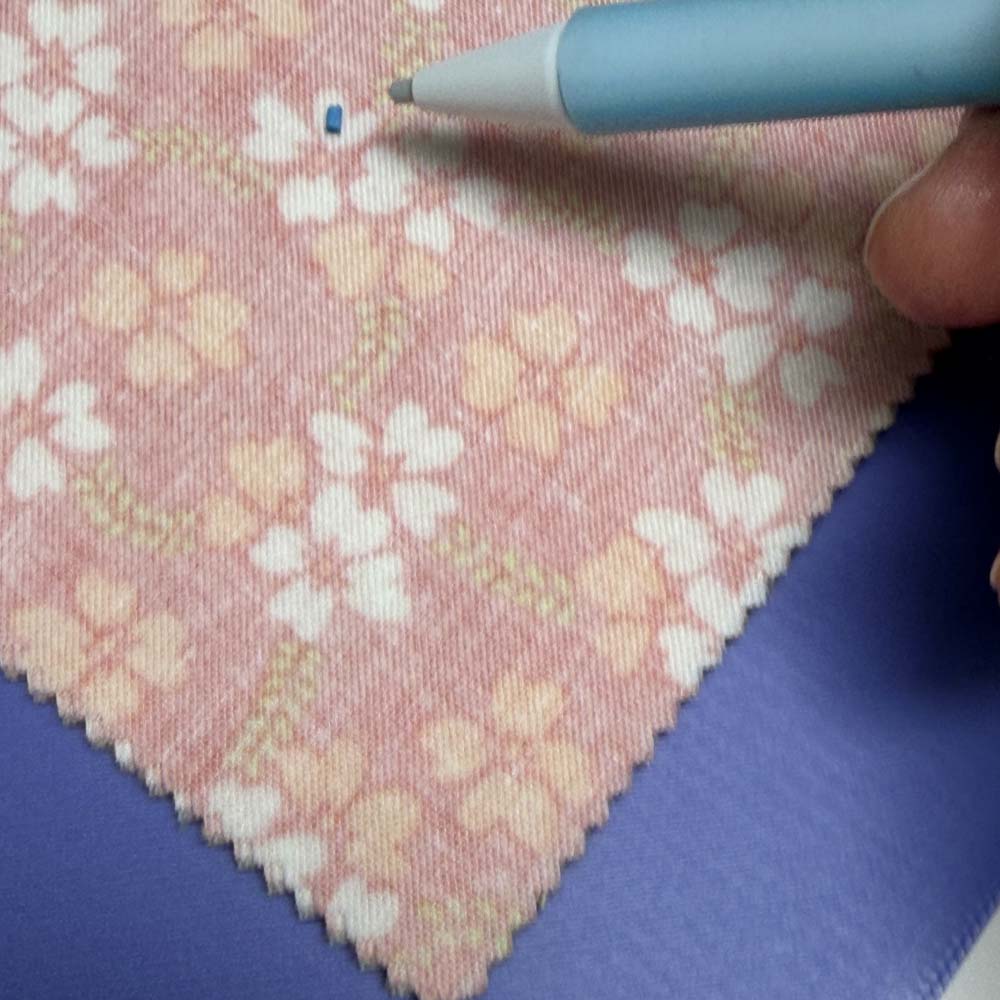
I’ve tried a few marking tools, and my go-to marker is a FriXion Pen. However, FriXion Pens don’t always carry a lot of ink and it takes several passes to get a strong line – whether or not you’re using the Spee-Di tool.
Heather at Purple Hobbies prefers to use a mechanical pencil for its ease and consistent line with one pass.
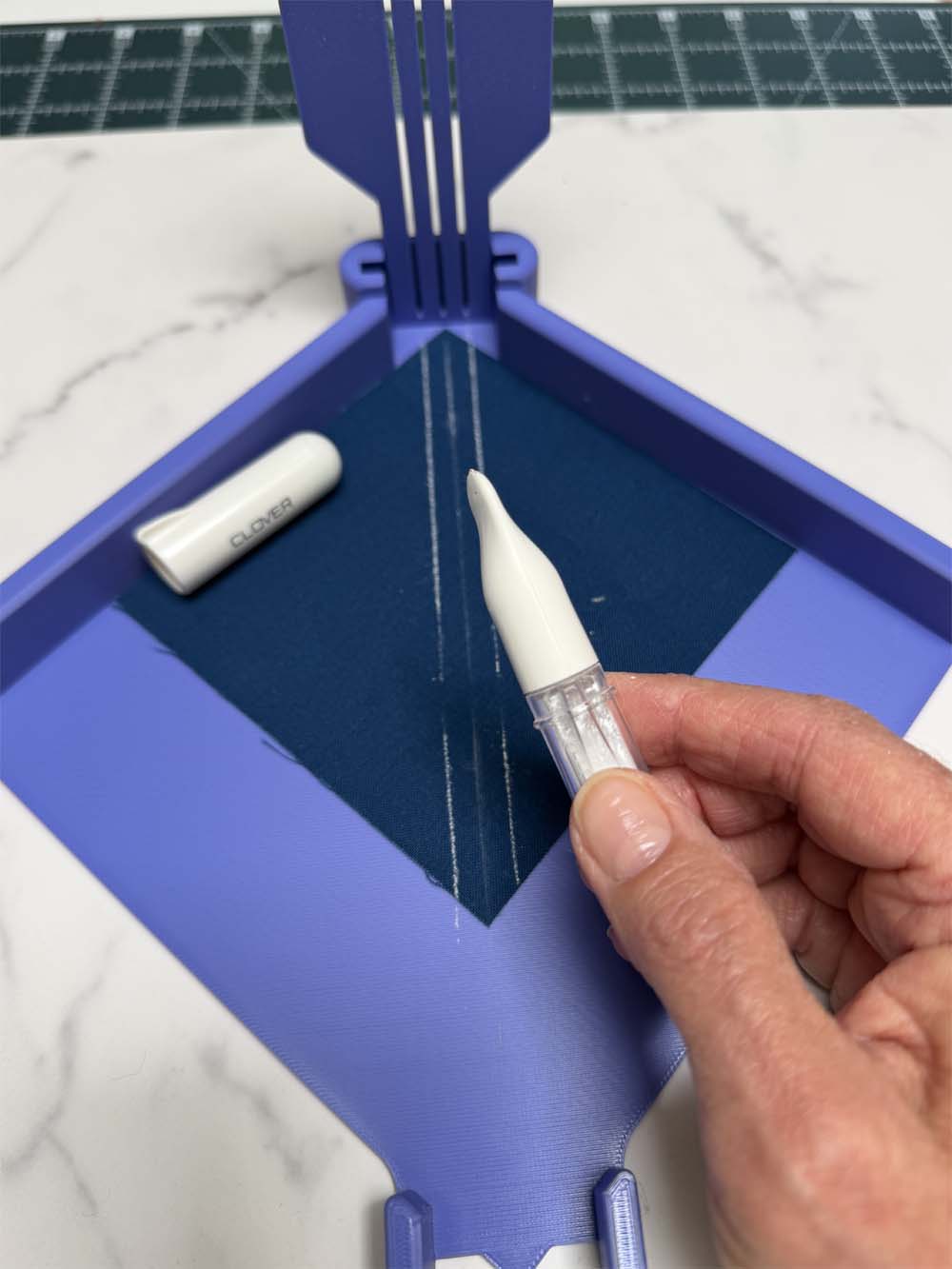
I’m also favoring Clover Chaco Liner Pens because they work well, they’re refillable and come in several colors. There are different styles of this chalk liner; make sure you get the updated Chaco Liner Pen and not the original Chaco Liner which is too thick to fit inside the slots.
Tips For Marking Diagonal Sewing Lines
Accurate diagonal sewing lines lead to more precise HSTs and cleaner stitch-and-flip corners. The process starts with marking the diagonal lines accurately. Below are a few tips when using the Spee-Di Tool.
- Make sure the fabric squares are placed snuggly into the corner(s).
- Mark from the center of the square out toward the corner so the pen or pencil doesn’t get caught on the fabric edge.
- Hold the handle in place with enough pressure to keep lines steady.
- Practice first with some fabric scraps to get the hang of it.
Pros And Cons
Pros
- Easy to use
- Makes marking diagonal lines fast and easy
- Ability to mark 1/4″ on each side of the center diagonal
- Works with most thin marking tools
- Perfect for precuts
- You can stack a bunch of fabric squares at once
Cons
- Can be hard to tell if the markings are strong enough to see without lifting the handle.
- Some mechanical pencils may break easily while marking.
Discount Code
Heather from Purple Hobbies has given my readers a coupon code for 15% off all products! Use the code CraftyQuilter at checkout. You can also click on any of the Purple Hobbies links in this blog post and the coupon will automatically be applied.
Final Thoughts
Marking diagonal lines may never be the most exciting part of quilting, but the right tool can certainly make it faster and more enjoyable. The Spee-Di Tool has earned a permanent spot in my sewing room, especially when I’m making flying geese, half-square triangles, or any project with stitch-and-flip corners. If you’re looking for a simple way to save time while improving the accuracy of your quilt blocks, I think this clever little tool is well worth adding to your quilting toolbox.
Last tip: Pin the image below so you can find it later!

Discover more from The Crafty Quilter
Subscribe to get the latest posts sent to your email.
Thanks for the review and the link to Purple Hobbies … lots of fun things there.
Do you have any thoughts on color choices for the tool? I’m thinking in terms of contrast with the fabric. I guess that doesn’t really matter for drawing the lines, but possibly in being able to see that the fabric is neatly lined up in the corner.
Have you tried the smaller 3” tool? If so, is that easier for 2 1/2” squares? I like your idea for marking 2 1/2” squares the larger tool – putting a stack in each corner. As long as they aren’t wiggly, that seems the way to go.
If I purchase the 10 inch Spee- Di Tool can it be used for any size square. Can you adjust the sides down to say a 6 1/2 in square?
Thanks
This looks pretty slick! So the fabric doesn’t move around because of the pressure you put on it?
Julie,
Thanks for the review. When I use my quarter ruler to draw lines for half square triangles sometimes it slips ever so slightly.
I love the new tools you get to try! Thank you for sharing!❤️