
My review of Essential Thread from Connecting Threads
As promised, I’m back with a review of the Essential Thread collection from Connecting Threads. A few months ago, I was given five spools of Essential Thread that coordinated with Connecting Threads’ Spring Nectar fat quarter bundle. You can read about my experience with Connecting Threads fabric here. Since that blog post, I received a few messages asking about their thread and from others who have tried it and love it. Now that I’ve had a chance to use it, I’m ready to share my experience!
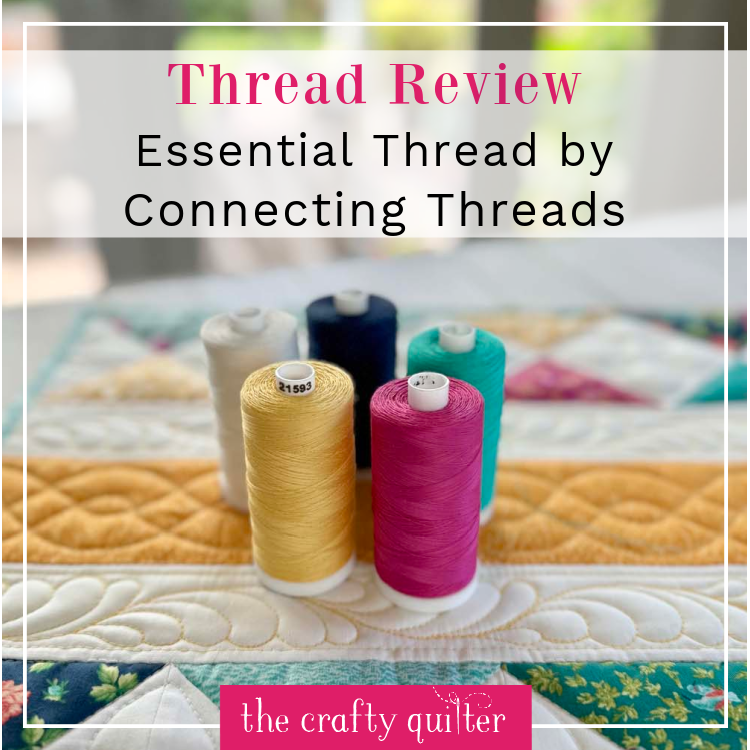
What is Essential Thread?
Essential Thread is a 100% cotton thread made from extra-long staple cotton and manufactured by Connecting Threads. It’s 50-weight, 3-ply and comes in a large assortment of colors. The description says it is satin-finished giving it a gently lustrous sheen.
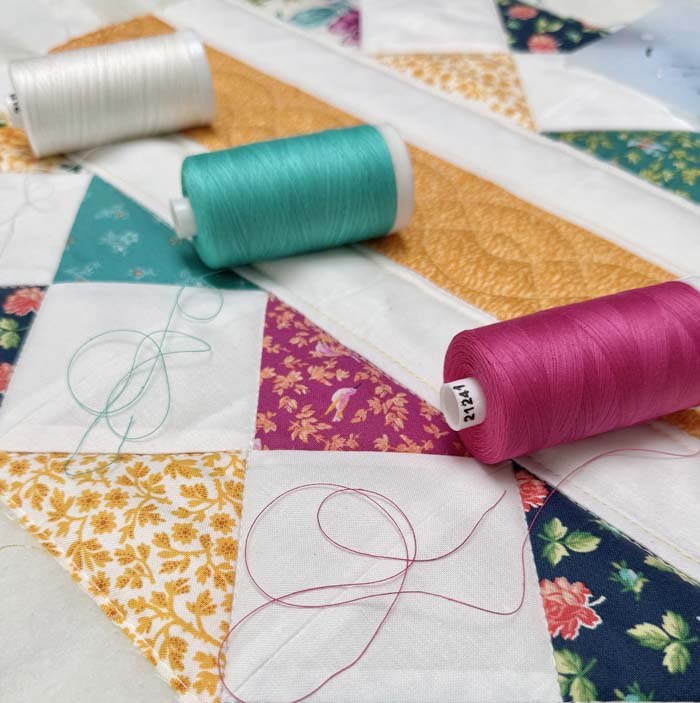
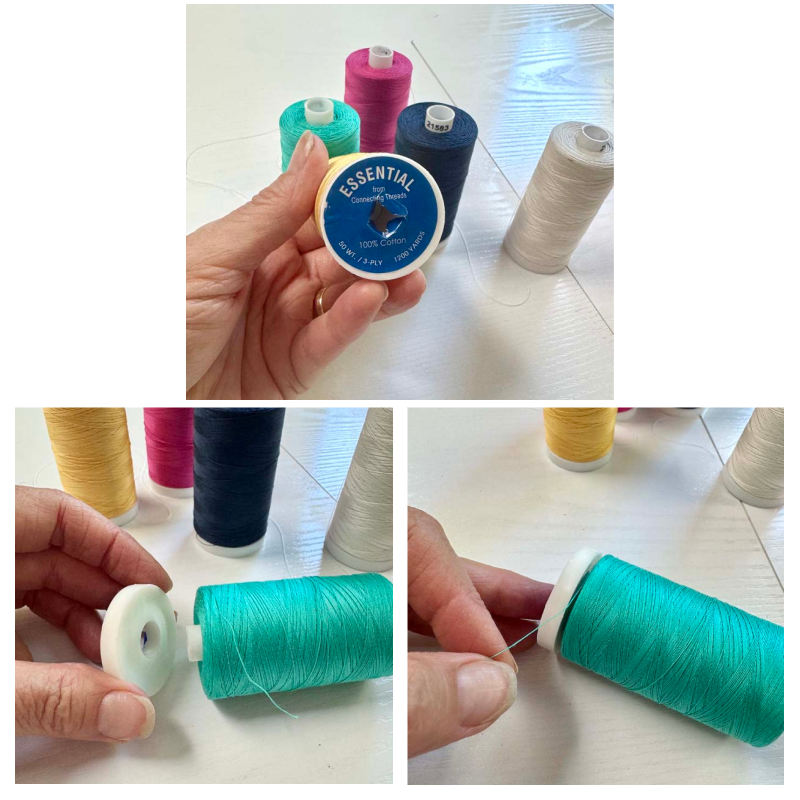
- The thread weight (50 wt, 3-ply) is standard or average size and thickness. It’s a good all-purpose size.
- It’s available in 1200 yard spools and 5000 yard cones.
- The price of a spool is $6.99 and the cones are $17.99 as of August 2025. They both happen to be on sale for up to 30% off thru September 5, 2025!
- The bottom of the spool cap detaches easily. This is a great place to secure the loose end of the thread when you’re storing it.
How I used Essential Thread
I used Essential Thread for piecing as well as for quilting by machine and free motion quilting. I also stitched the binding with it, all by machine. I can’t speak to how well this thread will hold up over time, but I can tell you how it performed while using it.
Piecing
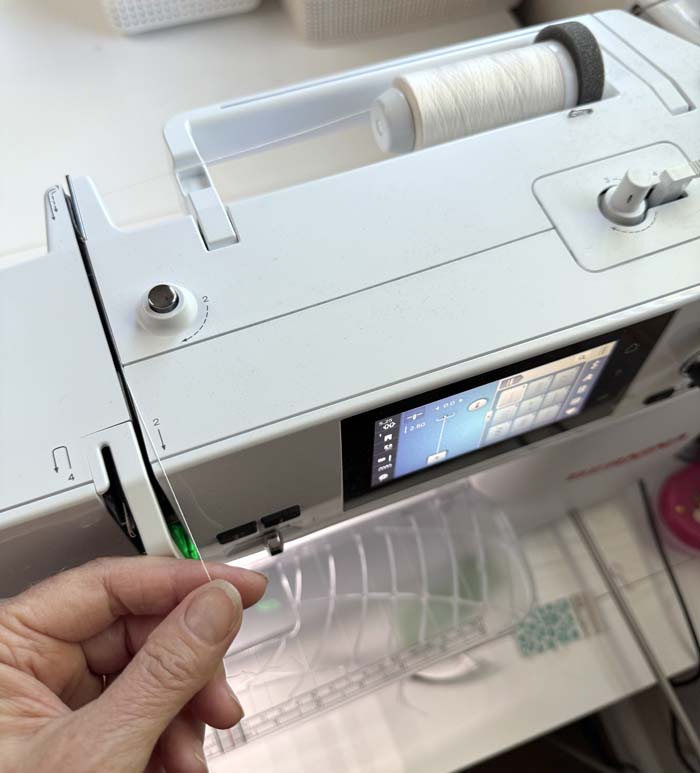
I did some piecing with Essential Thread (ivory color) on the top and in the bobbin. My sewing machine (Bernina 475 QE) handled the thread with no problem. By that I mean there were no tension issues and it unwound from the spool easily with no hang-ups in the thread path.
The stitches produced were even and smooth. Normally I use Aurifil 50 wt. 2-ply thread for piecing which is slightly finer than most 50 wt 3-ply threads. That also means a 2-ply thread creates slightly flatter seams. That’s still my preference for most of my piecing.
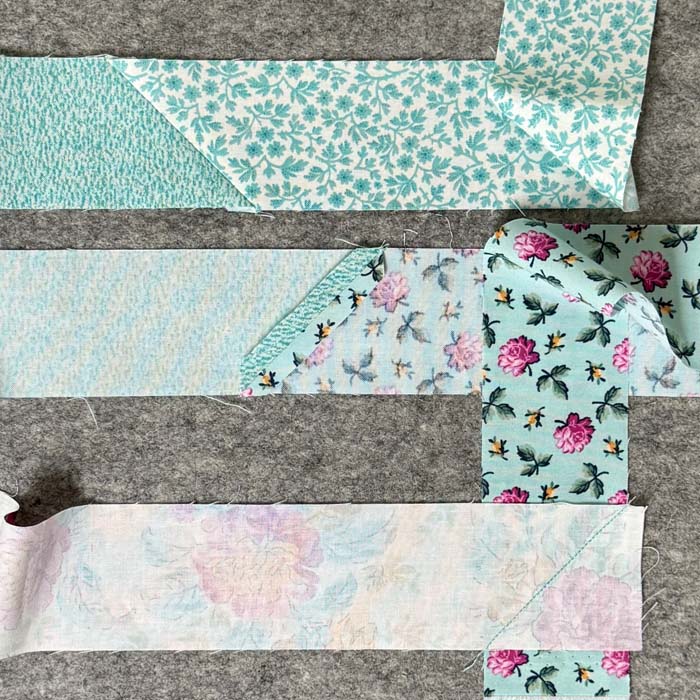
I think Essential Threads is great for general craft sewing, especially for things like bags, pouches and pillows. It’s also fine to use for quilting, especially if you’re using quilting cottons, flannels or minky. For batik fabric or Art Gallery Fabrics, specifically, I would opt for a 2-ply thread because those fabrics are made with a higher thread count which gives it a tighter and denser weave.
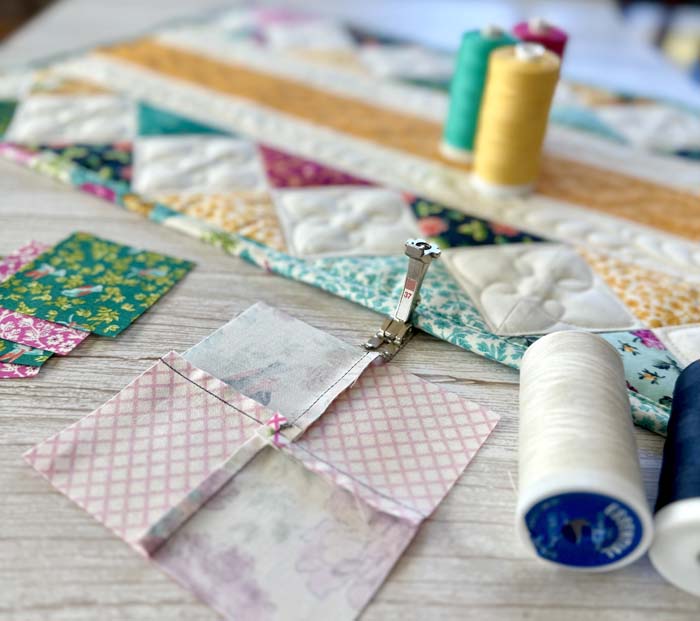
Quilting
I made a small quilt top from scraps that needed to be quilted and it was perfect for testing out Essential Threads. The first part was stitching in the ditch (seam) using a walking foot. I often do this when I want blocks to have definition and to further stabilize the quilt.
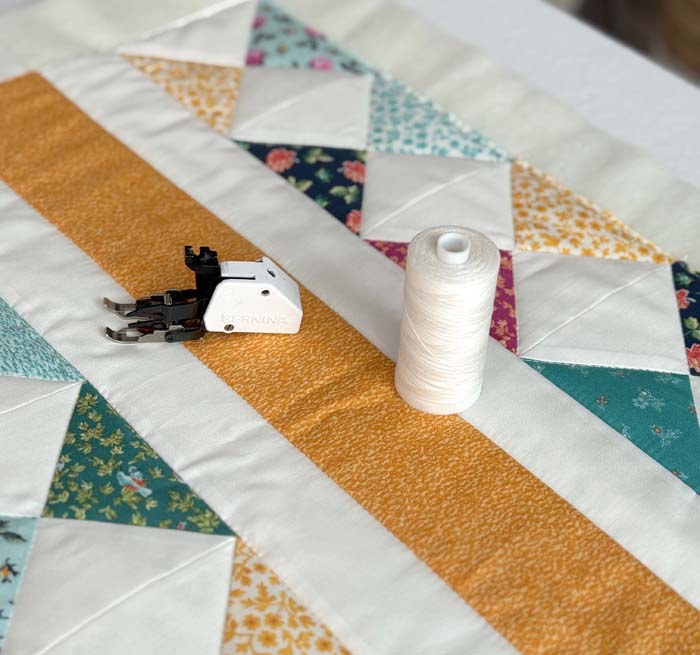

This type of quilting is meant to be almost invisible. The stitches lay in the seam and it requires a steady hand; any wobbling will be noticeable.
I’m happy with how this part turned out. The thread doesn’t disappear or sink into the seam as easily as a thinner thread would, but I like the effect of seeing the stitches as an accent or an outline. In some sections it’s actually hard to see the stitches – I think I aimed well! If you’re looking for completely invisible stitching, I’d recommend a finer thread; maybe a monofilament, a 60-weight or a 50-weight 2-ply.
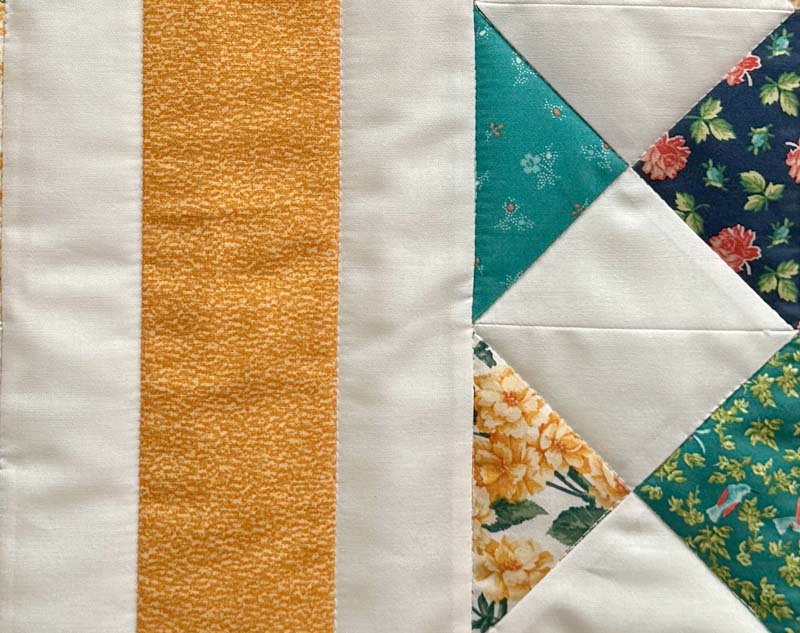
I used the walking foot again to stitch a cable design in the center yellow strip. It would have been fine to do this free motion, but I wanted to use the walking foot in an open area. I marked the design using a stencil and chalk powder. I used the lemon chiffon color for this section, and it turned out great.
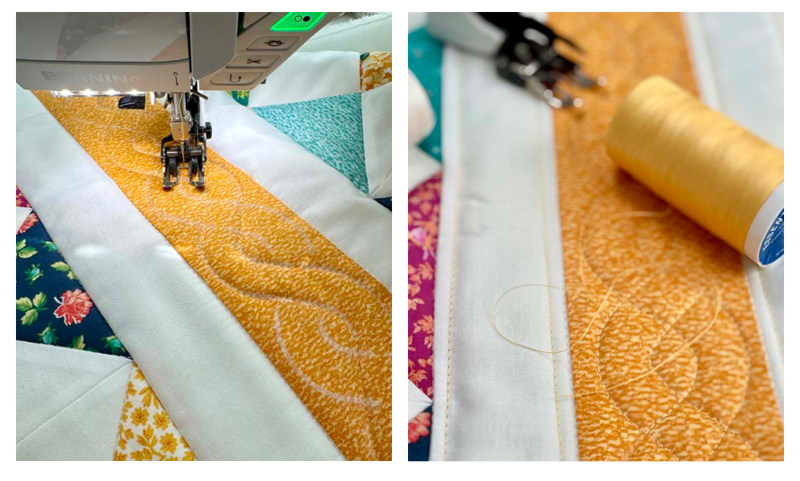
Overall, I’m happy with this thread for machine quilting thus far. It has a nice profile and it feels good while stitching. I had no tension issues and my stitches were even.
Free motion quilting
I used another stencil to quilt the white square spaces along both long sides. I used the ivory thread color and free motion quilted each motif. This is such an easy design to stitch and the size was perfect.
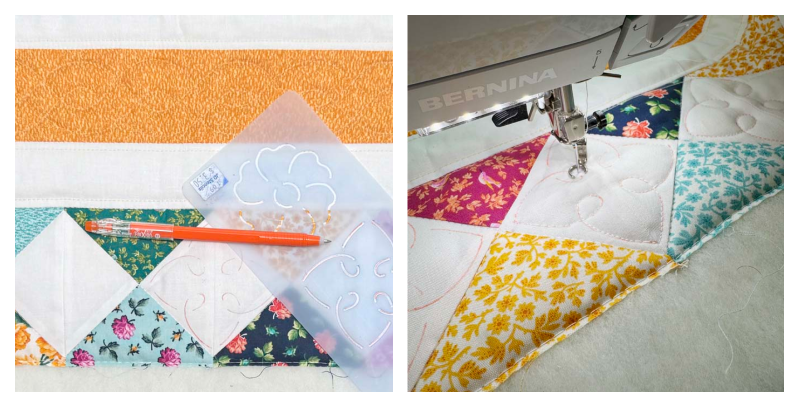
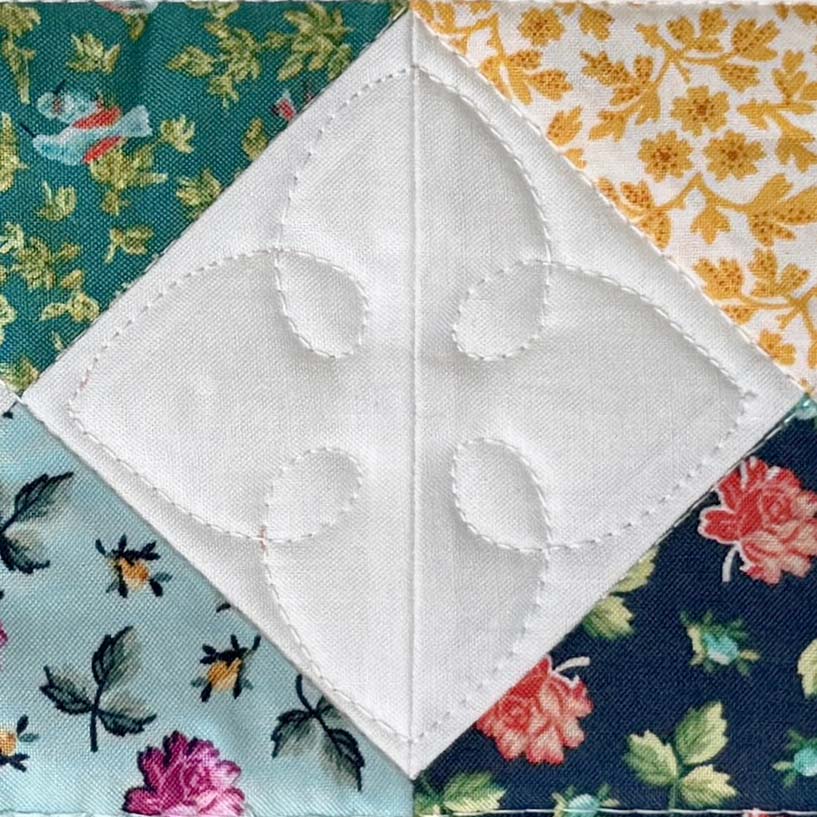
I like how the Essential Thread handled and stitched for this design. It shows nicely on the fabric and I had no issues with tension. I used a topstitch size 80/12 needle.
The final sections to quilt were the white bands running down the center. I chose a feather design for this space and the only thing I marked was the center spine. I used the lemon chiffon thread color (I was feeling brave) for a little contrast.
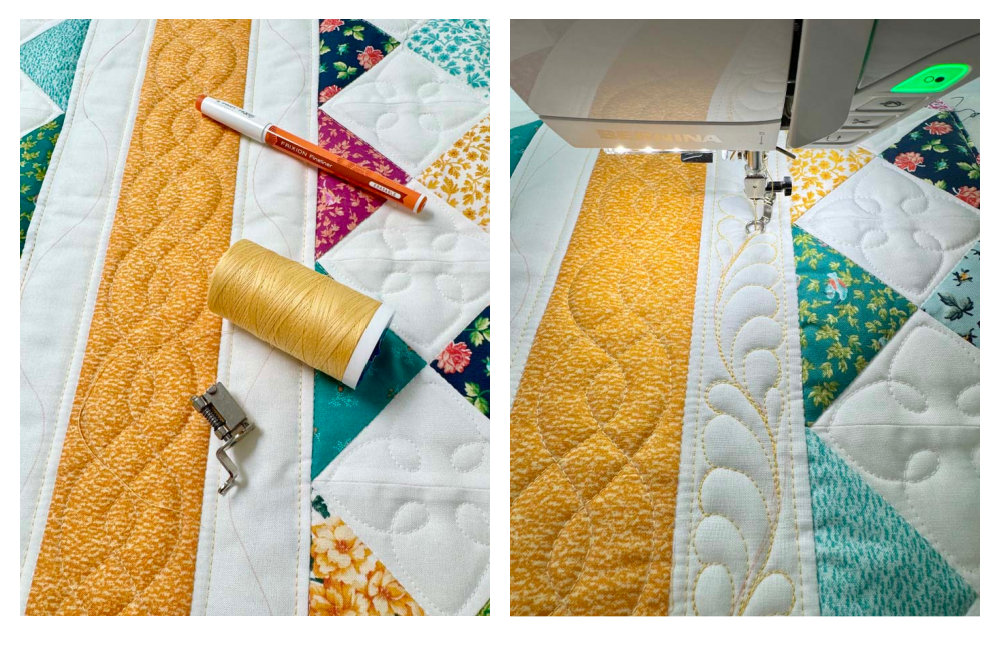
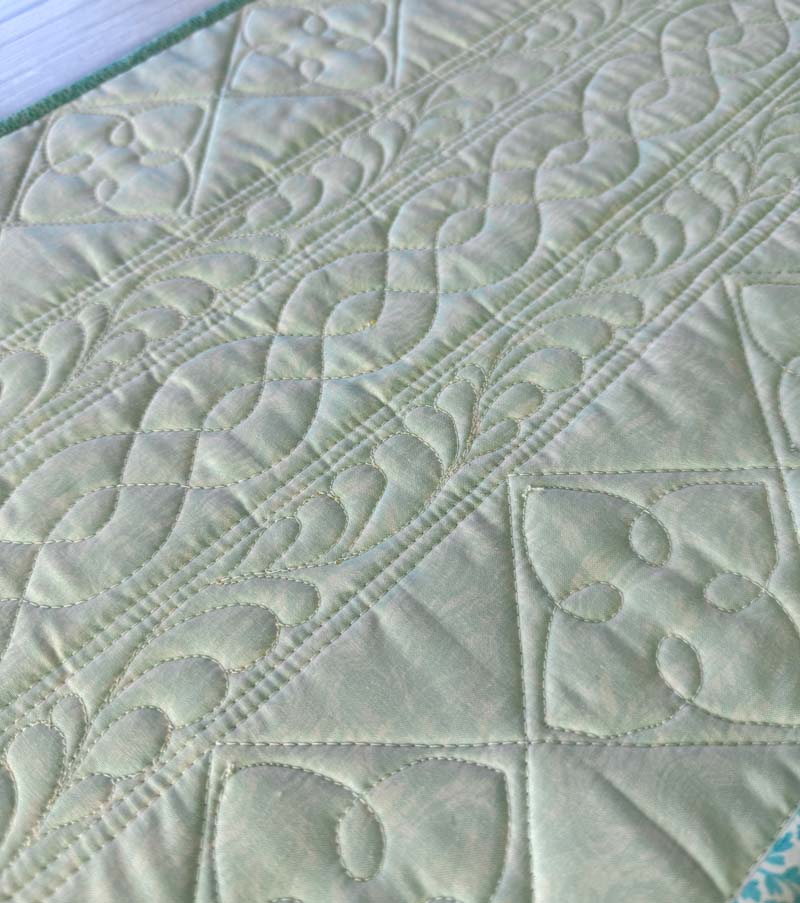
The feather turned out fine, but I don’t like to use such thick thread for this type of feather. It requires some backtracking (stitching back over previous stitches) and it can look heavy and thick in those areas. In the photo below, you can see how the spine looks thick in some places and you can see the backtracking on the top of every other feather. You might notice I took that photo before I erased the center spine mark.

Final thoughts

There are so many options when it comes to thread. I prefer working with cotton thread when using it to make quilts, so I was happy for the opportunity to try out Essential Thread. I’ve divided my thoughts into two categories: favorable and unfavorable. Keep in mind, these are all based on my short experience while working with the threads and my particular sewing machine.
Favorable
- The Essential Thread collection is a great value for those looking for an economical option.
- It performed well when piecing and quilting. Good tension and handling.
- I like the feel and color saturation of the thread.
- Lots of color choices.
- In terms of lint, it was in the middle. Not extremely linty, but not lint-free.
- Great for topstitching and straight line quilting.
- Good choice for general sewing and crafting.
Unfavorable
- It’s not my first choice for piecing. Because of the 3-ply it has a larger profile in the seam.
- It’s too thick for intricate quilting such as tiny stippling or heirloom feather designs. Thread build up can occur when backtracking or dense quilting.
- I can’t attest to its durability. I’ve only read one other review that mentioned the stitches started to break after frequent use and washing. That’s one person’s experience which can be very dependent upon fabric, weather conditions, washing, etc.
- Every sewing machine is different, so it may not be compatible with all.
We have so many choices when it comes to fabric, thread, notions and tools. If you’re looking for great value in an all-purpose thread, Connecting Threads’ Essential Thread is worth trying. It’s a strong thread suitable for general sewing and quilting. If you’re working with tightly woven fabric or doing detailed quilting, I would opt for a finer thread such Aurifil 50 wt, 2-ply or a 60 wt. thread. It’s so nice to have options!

Discover more from The Crafty Quilter
Subscribe to get the latest posts sent to your email.
Wao, seems amazing. One of my friends is working in a football factory and they use this to make football related products. He share me this page link. Its really worthy.
I had a “bad” cone of the essential thread. It had burrs on it and when a burr passed through the needle eye it would shred and weakened the thread. Unfortunately I didn’t notice this immediately, I have literally had to resew by hand every seam in my granddaughter’s quilt. Connecting Threads did replace the cone of thread, but not my labor. I too prefer a finer thread for piecing. I just started using a spool of Gutermann 100% polyester and really like it for piecing.
Great review and I agree with you. When my kids were small I made a lot of machine appliqué clothing for them. Connecting Threads Essential thread is my favorite for appliqué on clothing because it’s thicker than other cotton threads. I takes a beautiful satin stitch. I never had a problem with durability in both sewing clothing or appliqué work. These were items that were washed and dried frequently.
Thank you for your review of Connecting Threads spools of thread. I have used them in the past as I gained experience of quilting, and I agree with your comments. I might add one thing, I piece on an older Bernina 830 Sport…I’ve found that the thread tends to break occasionally when I sew over a seam. It’s happened often enough that I no longer use this thread for piecing, just use it for regular sewing.
I totally agree with you, Julie. I’ve been using this thread line for many years. My favorites about this thread are the price (when on sale), and the huge variety of colors that they have. The sets of thread are nice, too, if you use a lot of the colors offered. You save a bit getting them.
I always enjoy your posts – keep it up!
I, too, have been curious about this thread. My preference is the Aurifil 50-wt 2 ply for the reasons you gave. After trying other 50-wt 3 ply threads, I have to say that Aurifil is the best thread for me and the one I’ll most likely stay with.
Thanks for this great review, Julie! I have never tried this thread but will keep it in mind. I do love my Aurifil 50 wt 2-ply for piecing and either Glide or Superior for quilting on my longarm.
I have quite a few spools of thread from Connecting Threads and have also used them for piecing and Quilting with cotton and flannel fabrics. I have a Jenome MC machine. If I am doing dense quilting, I go to polyester thread as it is stronger and does not break as easily. I do like CT thread for piecing and for quilting smaller items.
Hi Julie! Great review! Your quilting was so beautiful! I only quilt smaller items, and nothing fancy, and have not seen problems. That was sad to see a poor review of it standing up over time! When I send things out for the Long Armer to quilt, I know they use poly thread. Forget the brand. I also tend to not wash very much…love just throwing the table toppers and quilts into the dryer on no heat and let tumble for 30 minutes or so to get the dust out. Unless something has gotten spilled on them or soiled somehow. Time will tell, right! I am going to look into those stencils you used…made your little quilt so adorable! I need to up my quilting game a bit! Thanks and take care!!